

Ju.Cla.S. Smartcheck®: New Laboratory Technology 4.0 for the Tartaric Stabilization of Wines
The tartaric stability of a wine is considered a technical basis or oenology an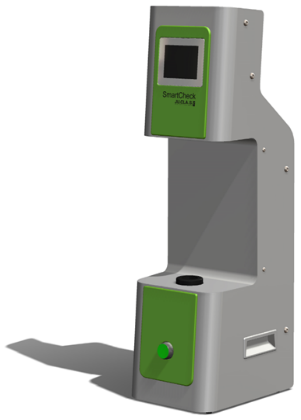 d has always been the focus of studies in Research Laboratories. Each wine has its own level of stability, which is assessed in a variety of ways that differ greatly depending on the instruments available and on specific production requirements. To Check the tartaric stability of wine, a highly rigorous test is performed with stabulation for six days at a temperature of -4°C: the stability of a wine can be clearly determined by observing the deposits that form during the test.
It is a very effective test, but it takes a few days to perform: in the wine cellar, production-related decisions have to be made much more quickly. This is why other types of tests have been developed, the accuracy of which depends on their nature and the way they are performed. The most practical test, which is widely used in oenological laboratories, is the “mini-contact” test, which involved monitoring the drop in conductivity (crystal growth) after adding potassium bitartrate to a wine subjected to continuous stirring at a low temperature.
X-Pro, The New Frontier of Inactivated Yeasts.
The antioxidant capacity of inactive yeasts and yeast derivatives (YD) is the latest among the many properties that have been ascribed to this kind of products. In the early 2000s first has been noticed that some of these products, naturally rich in Gluthatyone (GSH), had the capacity of reducing the loss of aromatic compounds from the wine over the time during storage (Andújar-Ortiz et al., 2010). In the wake of these results, the GSH has been initially assumed to be the main responsible for the antioxidant properties of the YD.
Further studies proved that, along with the tripeptide glutathione, some other molecules can contribute to such a result, in particular those peptides that contain methionine, tryptophan, and tyrosine (Rodríguez- Bencomo et al., 2014). As in the case of the lees, the thiolic components play a key role when it comes to the antioxidant properties of the inactivated yeast.
MFTC: Tangential Filtration According to Juclas
JUCLAS crossflow technology, commercially known as the MFTC, features 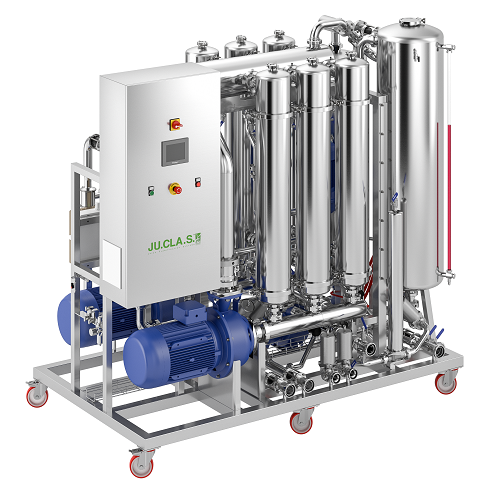 organic hollow fiber membranes of 15m2 per membrane, encased in a stainless steel housing, capable of flowrates up to 350 gal/h. The inert membrane polymer was selected after extensive trials for its strength and durability while remaining respectful to the wine being filtered. The selected polymer is extremely versatile, capable of filtering must, wines post-fermentation, and aged wines directly prior to bottling.
Juclas MFTC features fully automated filtration and CIP cycles, which can be programmed to customize the filtration parameters for each specific wine. This allows the MFTC to work at extremely low pressure, preserving the quality and aromatics of the wine with minimal temperature and O2 pickup. Filtration cycles include the option for a fully automated backflush, completely contained on the skid with no back-flow to the source tank.

Contact Us: www.juclasusa.com • juclasusa@vason.it • 1-707-259-1877



Loading comments...