

Things certainly were looking up a few months ago. Harvest ended. Nothing in Sonoma or Napa caught fire. And we even got rain! A lot of it. Here in Windsor, we finished out 2021 just south of 20 inches of rain for the fall season.
But then that was it. I may not have made it through dry January, but the weather did. Now we’re looking at a February that’s just as temperate.
Roll the footage…
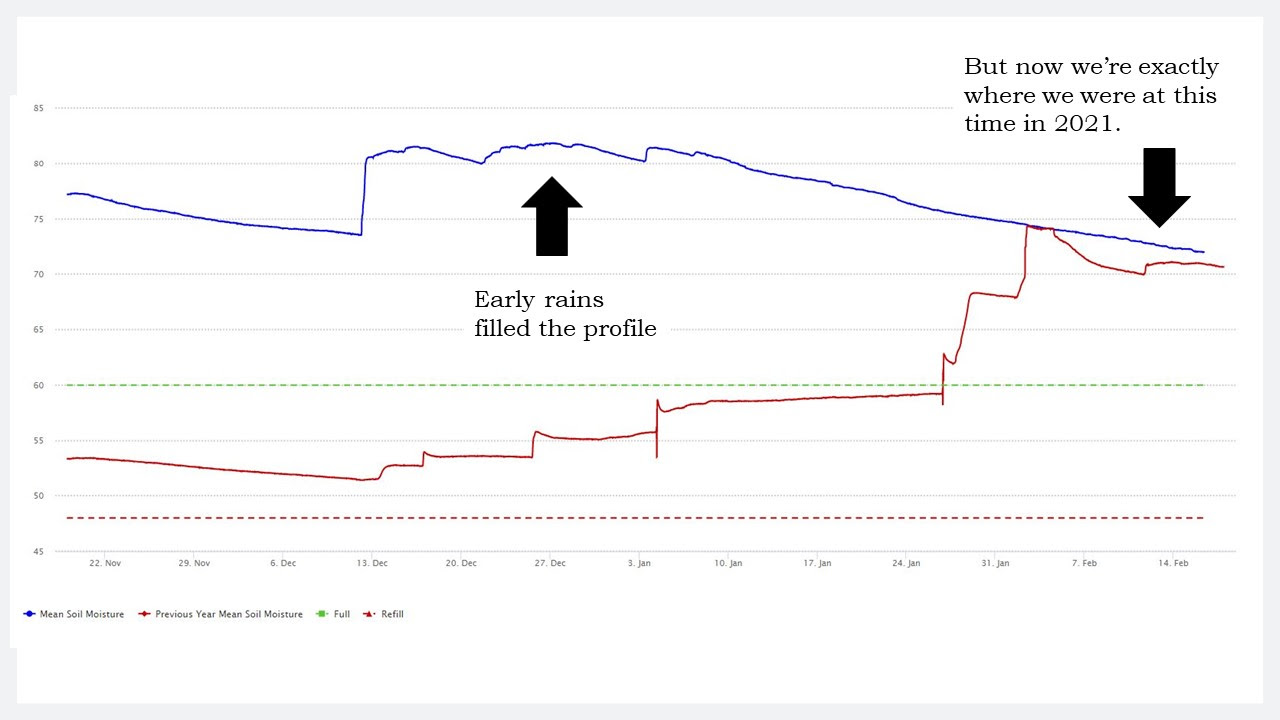
We love our soil probes here at AV, so let’s take a look at how this year stacks up against its parched predecessor.
Below is a Napa site. Now keep in mind, we had some rain in February of 2021, but as you can see the moisture reserves that we accumulated in the fall have left us exactly where we were last year, and that’s not a comforting place to be…
Ditto in the Russian River Valley…
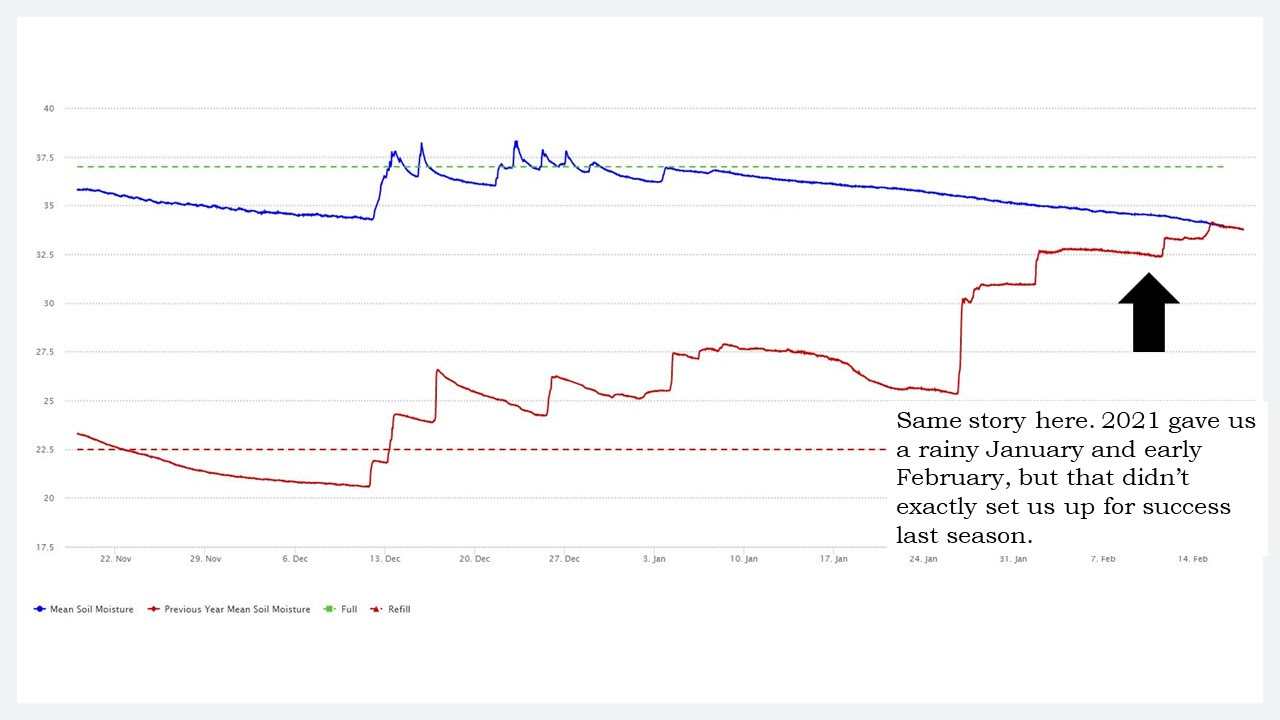 So is 2022 going to be just as hard?
Yes and no. One of the major problems last year was running out of water. If you use surface water-fed ponds, the early rains were probably enough to top them up. That’s great! You may need to irrigate just as hard as you did last year, but at least you’ve got something to work with.
As for how a continuing drought is going to affect you, that, as always is going to depend on your soil. Your vineyard may have hung onto all that water or it may already be dry, or partially dry. The only way to know for sure is to measure. So yeah, get yourself a soil moisture probe and enjoy the sunshine, because there’s more where that came from.
Time to sample that soil!
If your vineyard has been declining and you can't seem to understand why, there's a chance it's your soil. You could be facing a simple nutritional imbalance, toxicity, or nematodes. Maybe you have an abrupt change in texture and water can't percolate more than a couple feet. Like all things, you don't know until you look.
Here at AV we have some new equipment to help understand your own unique terroir.
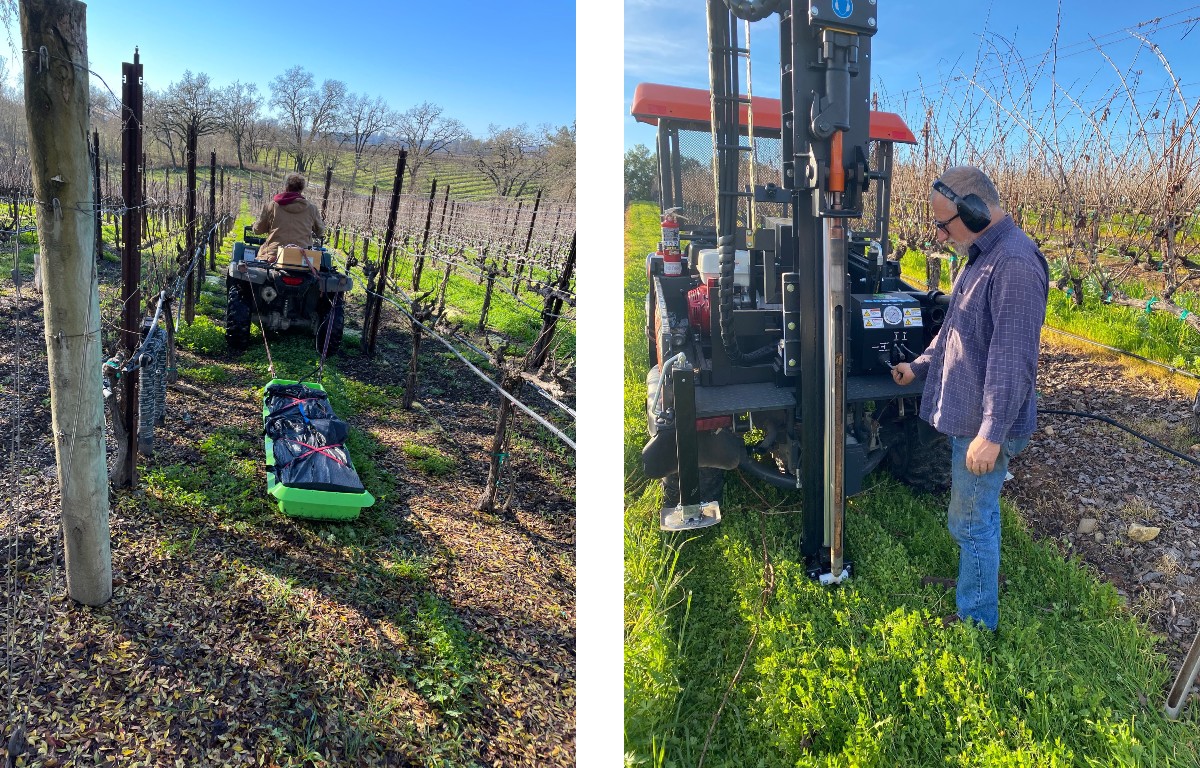
Pictured above are our new Electromagnetic sensor (left) and Powerprobe (right).
Using an EM sensor, we can scan your entire vineyard and divide it up into different soil groups. We can drill down (literally) even further with the power probe and identify problem areas in terms of chemistry and soil pests.
Take a look at the map below we created for one of our clients. We were able to capture all this variability in his soil and sample right where it counted.
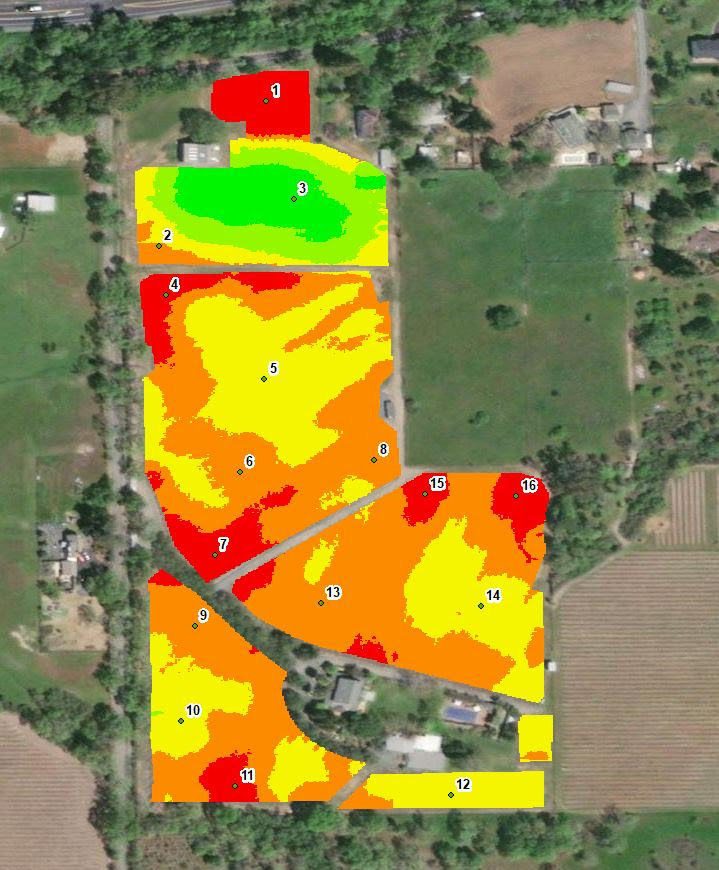
Numbers indicate where we took soil cores with the Powerprobe. Some blocks are way more variable than others.
Want to see for yourself? Now is the perfect time to schedule a soil investigation. Figure out what's ailing your vineyard, put your best foot forward when replanting, or just get a better sense of your wines' terroir.
Contact mark@advancedvit.com or loni@advancedvit.com to get your project on the calendar.
Want to know about other vineyard technology?
Contact paul@advancedvit.com



Loading comments...