

March 16, 2023
During malolactic fermentation (MLF), Oenococcus oeni, the primary bacteria involved in this process preferentially consumes malic acid.
However, as malic acid becomes depleted towards the end of MLF, the cells start consuming citric acid, leading to the production of diacetyl.
Interestingly, once the citric acid is depleted, the cells will then consume the diacetyl produced, which can impact the wine's flavor and aroma. In fact, the sensory threshold of diacetyl is only around 3-4 μg/l, highlighting the importance of controlling its levels in wine production.
Understanding the interplay between MLF and diacetyl production is crucial for winemakers to achieve the desired sensory profile in their wines.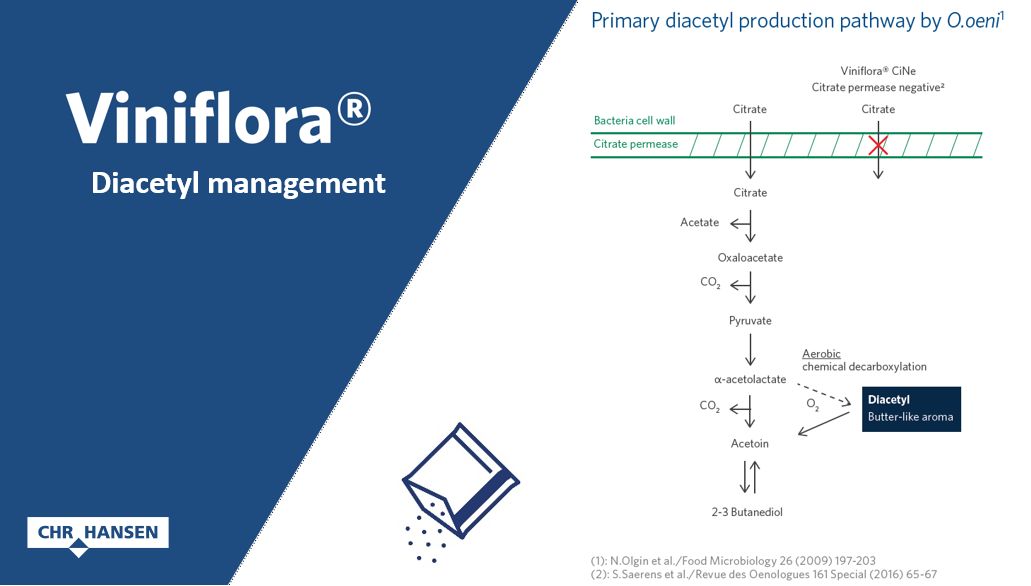



Loading comments...