

If a wine seems “green”, “herbaceous”, or “vegetal”, aroma compounds called methoxypyrazines (MPs) could be responsible. MPs are particularly important due to their ubiquity in grapevines and their extremely low aroma thresholds. These low thresholds make MPs some of the most odor-active compounds found in wine. Occasionally, they can have a positive impact by providing varietal characters– classic examples are bell pepper in Cabernet Sauvignon and grassy/gooseberry in Sauvignon Blanc. However, higher concentrations can mask fruity aromas and damage wine quality.
MP concentration can be such a make-or-break parameter that it’s often a major factor in harvest decisions. Harvesting later can reduce MP concentrations, but sometimes doing so can sacrifice other elements of fruit quality. However, MPs are very stable during fermentation and aging—so once they’re there, they’re there to stay. A number of studies have explored methods to lower MPs post-harvest, but these “fixes” can sometimes have negative effects on wine.
MPs in wine can come from a variety of sources, and understanding their creation is crucial to prevent high levels. As with most flaws, remediation of high MP concentration can be risky, so prevention is key.
Types of methoxypyrazines
There are at least four MP compounds that are currently considered significant in wine, but we will focus on the two most abundant (and best studied):
- IBMP (3-isobutyl-2-methoxypyrazine)
- IPMP (3-isopropyl-2-methoxypyrazine)
These two compounds are also found in vegetables and nuts. In particular, bell peppers have high levels of IBMP while peas have high levels of IPMP, and these compounds give them their distinctive aromas. An easy way to remember the difference is IBMP (Bell pepper) and IPMP (Pea). In different wine matrices, these two MPs can take on other characters as well, as discussed below.
IBMP
IBMP is generally the most abundant MP found in wine. It plays a major role in Sauvignon Blanc, where it accounts for about 80% of total MP content. IBMP character has been described as fresh vegetables, bell pepper, gooseberries, herbaceous, leafy, and vegetative in wine. The aroma threshold is about 10x lower in white wines than in reds (see Table 1).
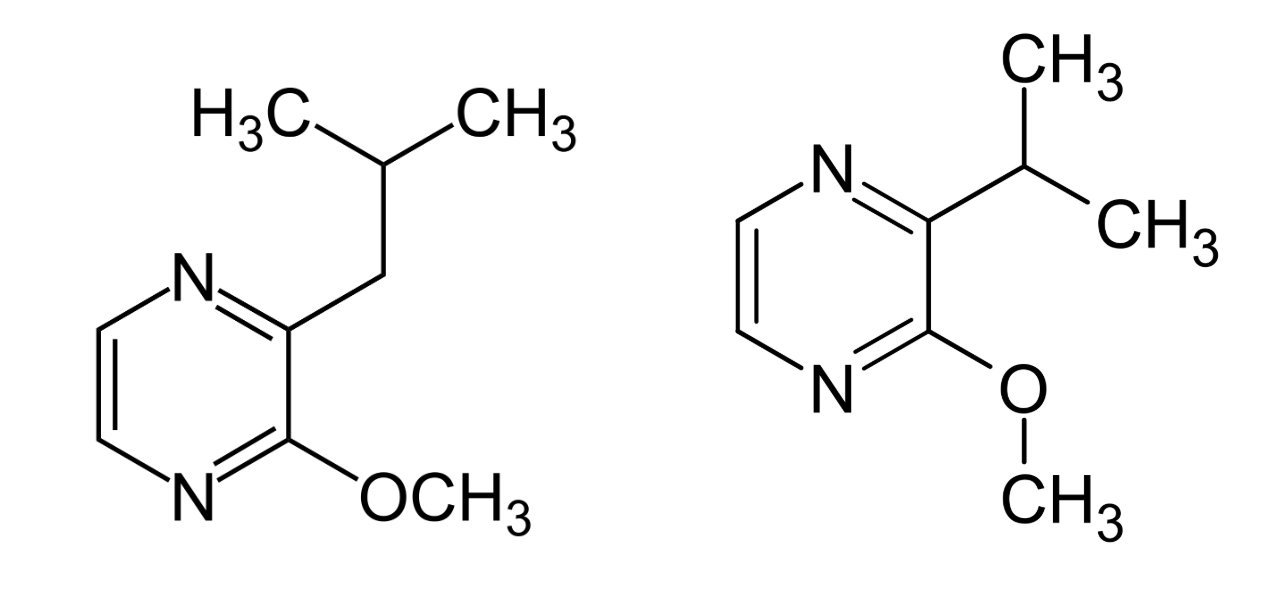 Molecular structures of IBMP (3-isobutyl-2-methoxypyrazine) (left) and IPMP (3-isopropyl-2-methoxypyrazine) (right).
IPMP
IPMP is the second most abundant MP. It is generally found at the highest levels in stems of grapevines, with lower levels found in the grape seeds and skins. Typically, it is only seen in wines that were fermented with the stems. Its aroma has been variably described as green pea, earthy, asparagus, leafy, and green beans in wines. Although concentrations are usually not as high as IBMP, the threshold for IPMP is extremely low (see Table 1.)
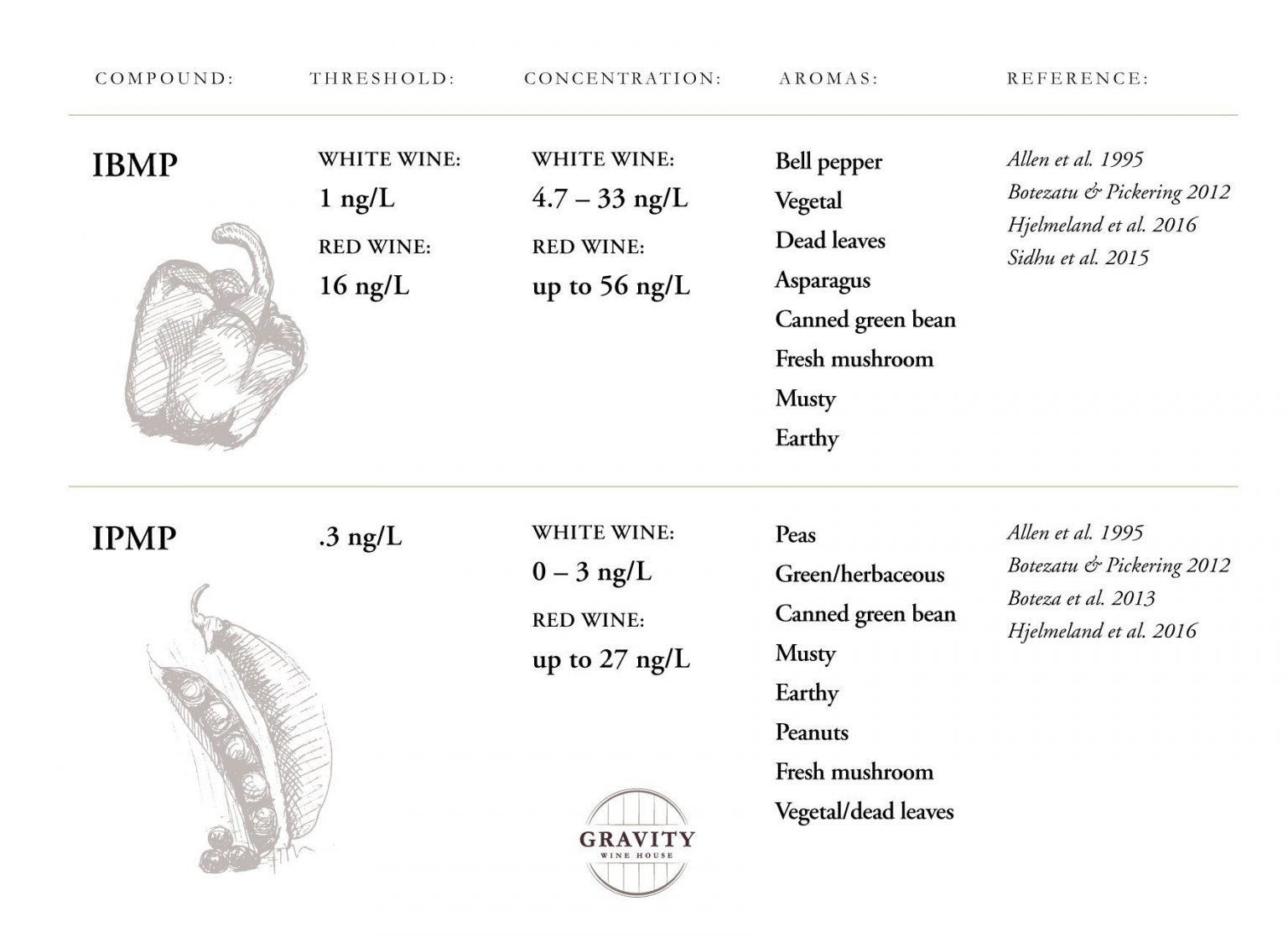 Table 1. Methoxypyrazine compounds in wine, their thresholds, reported concentration ranges, and aromatic characters.



Loading comments...