.jpg)
By Leeann Froese, Town Hall Brands
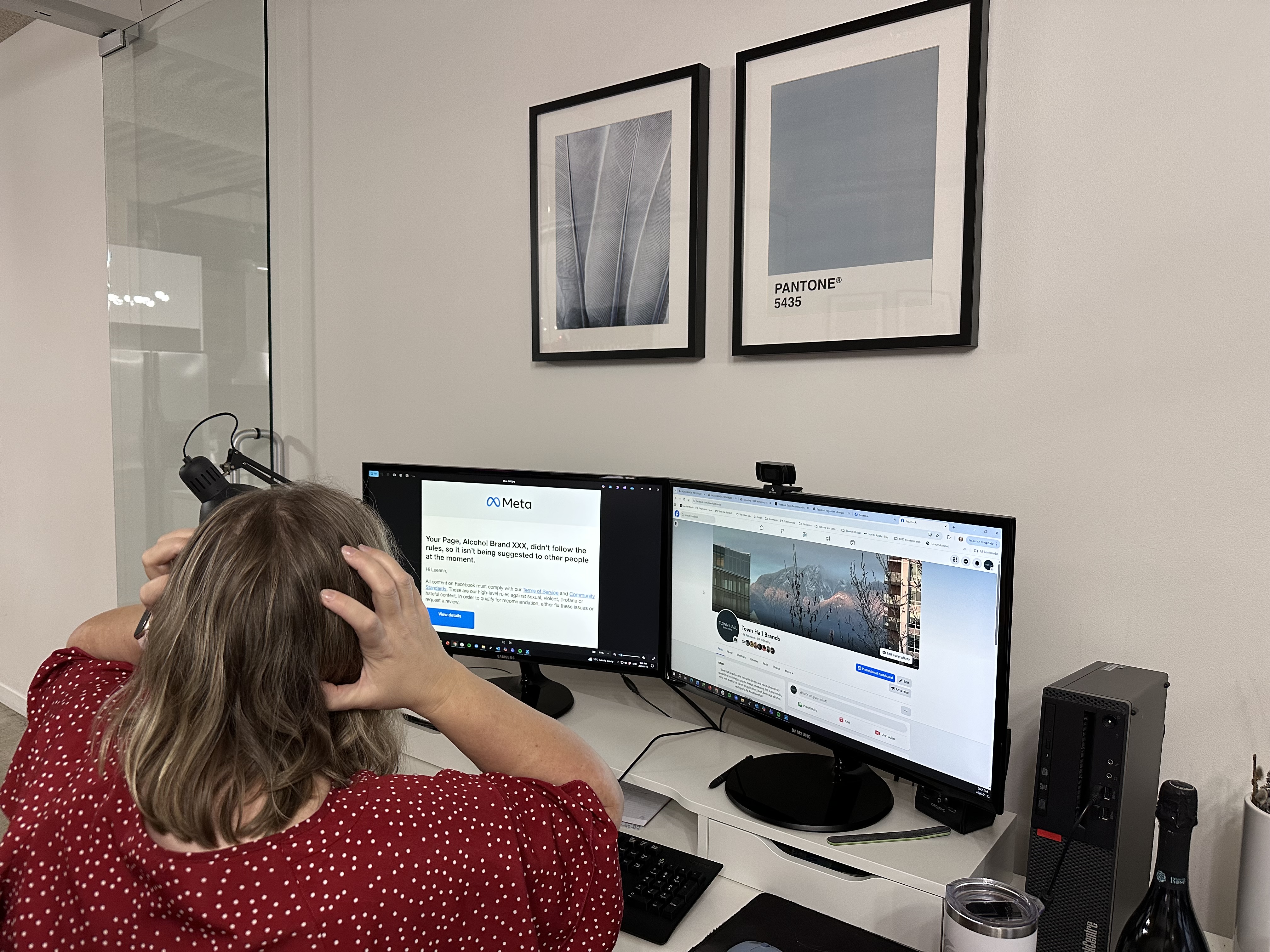
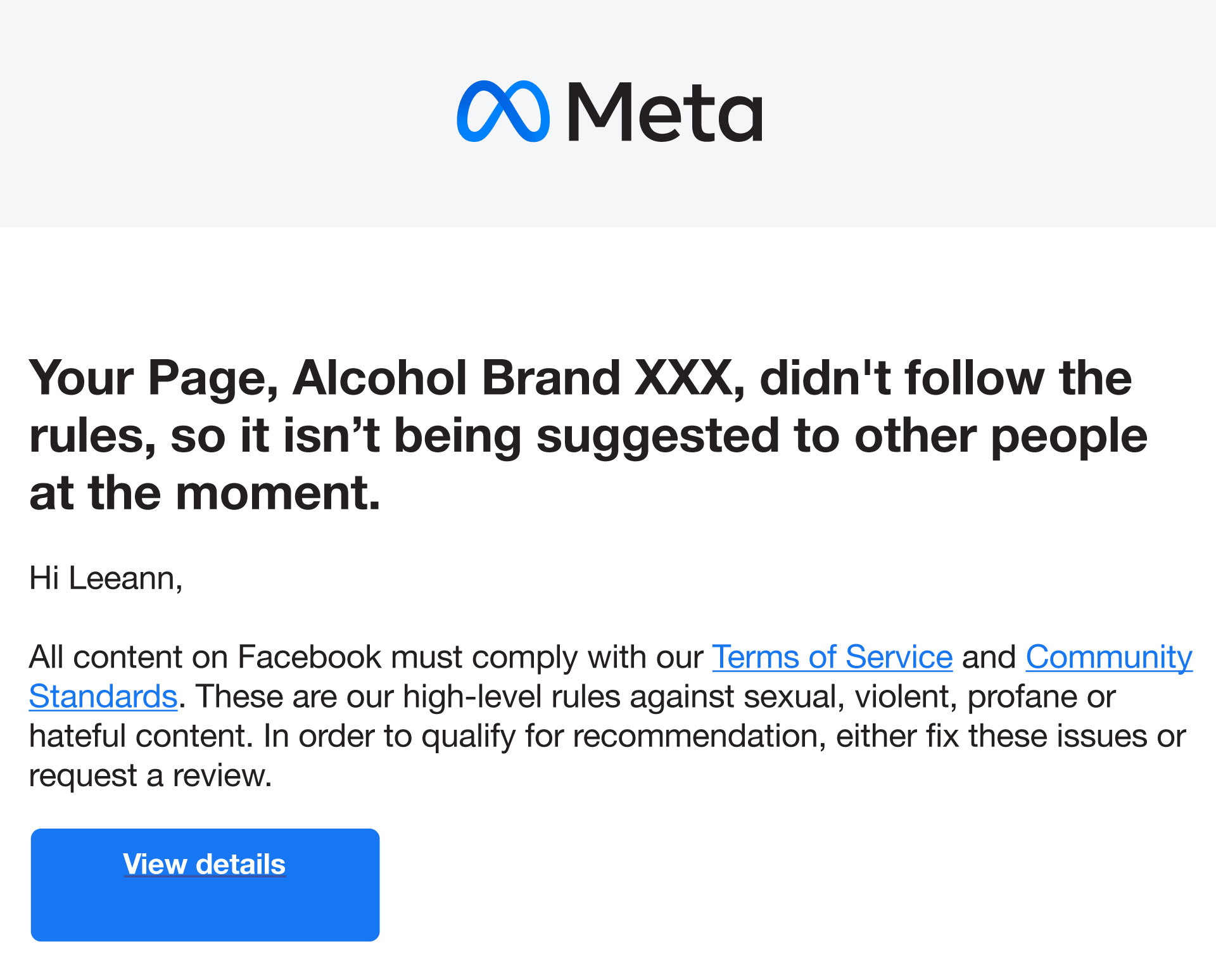
Over the past few months, wineries across North America have begun receiving a vague but unsettling notification from Facebook stating that their Page is “not being suggested to other people at the moment.” In many cases, there are no visible violations, no content removals, and no clear explanation.
Pages remain live. Accounts remain in good standing. But organic discovery has narrowed.
This is not a glitch, and it is not necessarily a punishment. It is a platform decision, and it has real implications for how wineries should approach marketing in 2026.
This is not a compliance failure
Most wineries encountering this issue are fully compliant with Facebook’s Community Standards. Their content is allowed to exist on the platform. What has changed is recommendation and amplification, which Facebook controls separately under its Terms of Service.
In other words, a Page can follow every rule and still be excluded from algorithmic discovery.
This distinction is important because it explains why Facebook’s notice feels so vague. Recommendation eligibility is driven largely by automated systems, pattern recognition, and risk management — not by a single identifiable post that can easily be “fixed.”
Why Facebook doesn’t tell you what’s wrong
For regulated categories like alcohol, Facebook applies a more conservative approach to amplification. Signals that can affect recommendation eligibility include:
- Language that implies overconsumption or partying
- Imagery that suggests excessive drinking or unclear age context
- Sexualized or suggestive copy, even if subtle or humorous
- Historical content patterns, not just recent posts
- Unmoderated comments from followers
In many cases, there is no single violation to point to. This is intentional. Platforms do not disclose exact triggers because doing so would allow the system to be gamed.
What wineries can do if they receive this notice
While there is no guaranteed fix, wineries should take a measured and practical approach:
- Audit both recent and historical posts for borderline language or imagery
- Archive or remove content that relies on innuendo, party framing, or exaggerated consumption cues
- Review Facebook Page category, business description, and age restrictions for accuracy
- Moderate comments more actively, as user comments count as Facebook Page content
Only request a review once anything questionable has been cleaned up
Even after review, recommendation may not be restored. That outcome is increasingly common and does not indicate wrongdoing.
The bigger issue: you do not own social media
At Town Hall Brands, we have long advised that the most important assets a winery can build are its website and its email list.
Social platforms are powerful tools, but they are “rented” spaces and in the case of Facebook, Meta is the landlord. Algorithms change. Policies tighten. Categories like alcohol are treated conservatively. Pages can lose visibility overnight with little explanation and limited recourse.
If a Meta account were to disappear tomorrow, a winery with a strong website, a healthy email list, and an established media footprint would still be standing. A winery that built its entire audience inside a platform would not.
That reality has not changed. What has changed is how clearly it is now being demonstrated.
What this means for winery marketing in 2026
These platform changes intersect with broader shifts already underway across the wine industry:
Storytelling must move forward.
Audiences are fatigued by narratives of struggle. The messaging that cuts through now is confident, optimistic, and focused on quality, place, and momentum. These stories travel better through media, newsletters, and owned channels than through algorithms.
Digital presence means conversion, not aesthetics.
A strong website that captures email, hosts earned media, and converts interest into action matters more than a perfectly curated feed. Social should drive traffic off platform, not act as the destination.
Smaller experiences travel further.
Micro experiences, seasonal offerings, and flexible add-ons are easier to share, easier to pitch, and easier to repeat than large-format events. They also perform better in PR and partnerships.
Collaboration is a growth strategy.
As individual Page discovery weakens, regional and collective storytelling strengthens. Media, tourism platforms, and consumers respond to cohesion.
Planning cannot be reactive.
The wineries best positioned for 2026 are using this planning window to rebalance their channel mix, strengthen owned assets, and reduce dependence on any single platform.
The renewed role of PR and earned media
One of the clearest implications of Meta’s shift is the renewed importance of earned media.
PR is not subject to algorithmic throttling. Coverage is searchable, permanent, and compounding. It supports SEO, feeds generative AI discovery, and builds credibility in ways platforms cannot suppress.
As social discovery becomes less predictable for alcohol brands, earned media once again becomes a primary visibility channel, not a secondary one.
A strategic reset, not a setback
This is not a signal to abandon social media. It is a signal to stop building businesses as if social media were guaranteed.
Platforms will continue to change. Policies will continue to tighten. Wineries that invest in owned channels, earned media, and intentional planning will be the ones that remain visible, resilient, and competitive in 2026 and beyond.
Does reading this give you anxiety and overwhelm? We are here to help. We have been marketing in beverage alcohol for more than two decades, and we have a team that can help you navigate all levels of media needs.


Loading comments...