

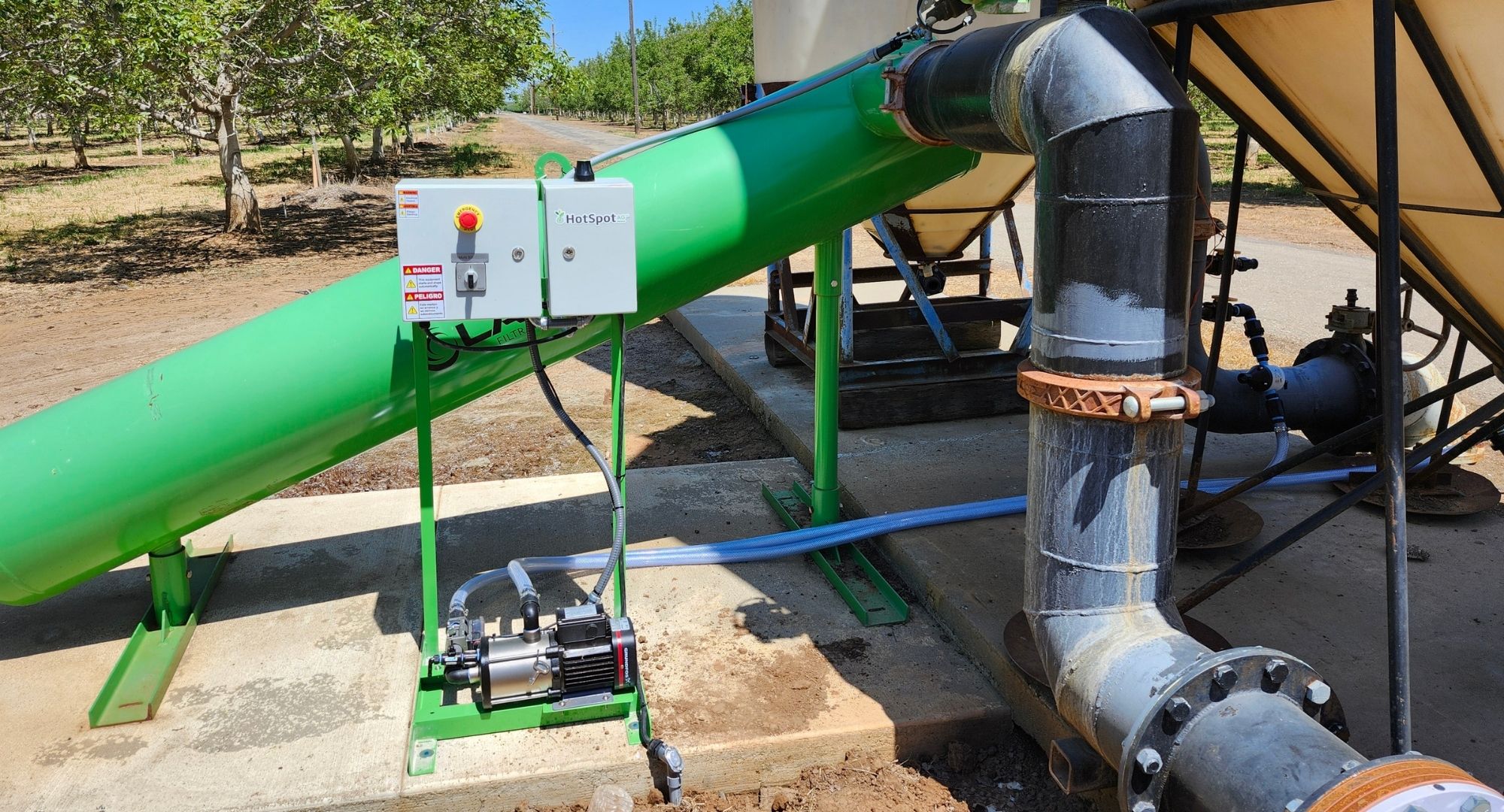
Continuous fertigation is gaining traction among growers who want to promote yield and preserve crop quality. This practice involves delivering smaller, steadier doses over the course of the crop season. Instead of applying large nutrient loads at select times during the season, maintaining a consistent injection rate that aligns closely with the crops natural uptake patterns can result in waste production and support improved crop quality and yield. In some cases, applying smaller doses within individual irrigation events can also be beneficial, but the primary value comes from season-long nutrient delivery based on the crops demand.
Field Observations and Operational Benefits
Growers are reporting a wide range of benefits from adopting continuous fertigation. For instance, almond grower Nathan Heeringa has noted improvements in almond development and overall performance when fertilizer is delivered in smaller, consistent doses. This method aligns with his broader experience that careful water and nutrient timing plays a significant role in supporting crop quality.
"By using this technology, I was able to reduce my total nitrogen use by about 10%, and my petiole samples still showed more than adequate nitrogen levels." -Nathan Heeringa
It’s important to point out that continuous fertigation is not just about agronomy; it is also about day to day practicality. Delivering nutrients in smaller increments reduces the risk of over-application and improves the nutrient efficiency, which contributes to better return on investment. At the operational level, growers report less labor required for application, timing, and overseeing fertigation events. Many also see the added value in having clear accountability between what was prescribed and what was actually applied. This ensures that nutrient plans and resources are executed efficiently.
Continuous fertigation can be done manually or with automation. However, without automation it is time intensive and can be difficult to accurately manage. If nutrient delivery is synchronized with irrigation automation, the need for manual starts or stops of applications is eliminated, allowing dedicated staff to be assigned to other tasks. Over the course of a season, these efficiencies add up and result in a noticeable increase in production and quality.
Supporting Continuous Fertigation with Automation
For many operations, the success of continuous fertigation depends on the technology that controls it. HotSpot AG provides the monitoring, automation, and flow-based control needed to carry out continuous fertigation reliably, even when labor is limited or irrigation schedules vary.
HotSpot’s platform supports continuous fertigation by:
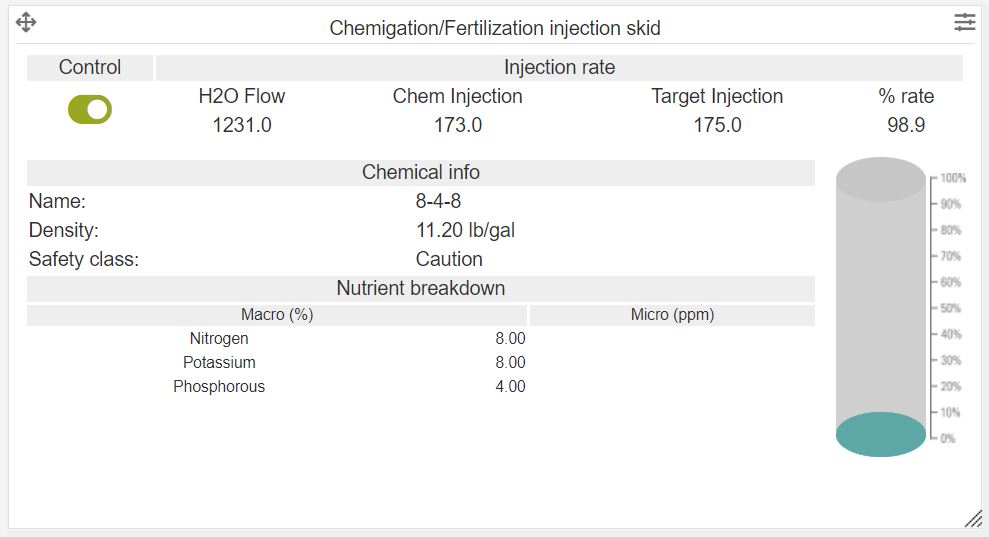
- Variable Rate Injection, allowing growers the ability to inject based upon the crop type, nutrient demands, and soil type.
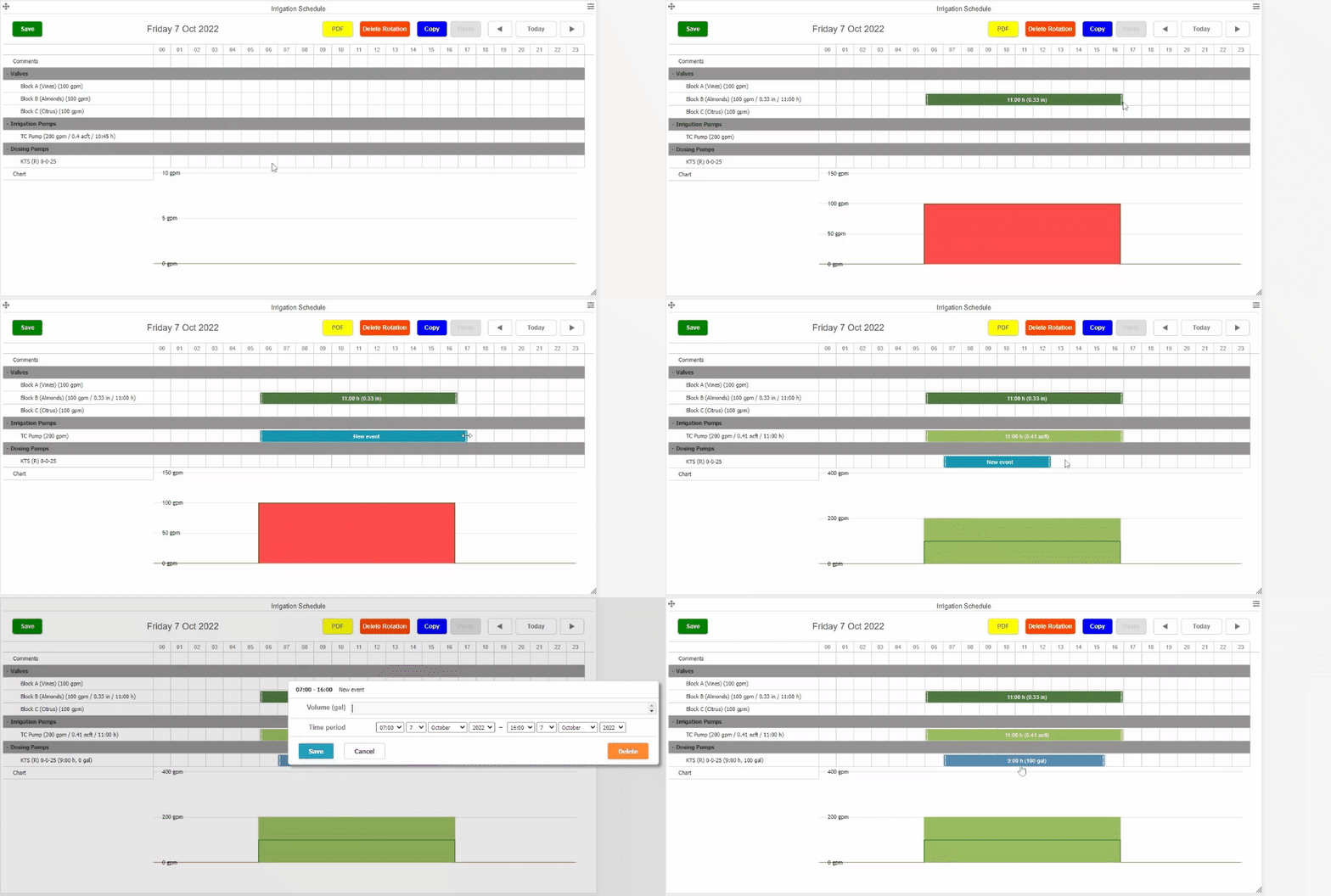
- Allowing growers to remotely schedule fertigations across any irrigation cycle without being physically present at the pump or valve.
- Providing real-time visibility into the fertigation skids performance so growers can verify that their plan is executing as expected.
- Maintaining detailed historical logs that help growers review application timing, seasonal patterns, and nutrient usage for planning future programs.
- When paired with HotSpot AG’s irrigation automation software, continuous fertigation becomes retrofitted to existing equipment, making it more accessible and easier to manage between injection and irrigation schedules.
These capabilities take much of the complexity out of continuous fertigation. Instead of relying on manual adjustments, growers gain a consistent and predictable application method that fits seamlessly into their irrigation workflow.
What Experts Are Saying…
Industry experience continues to reinforce that continuous fertigation is most effective when the right operational tools are available. Devin Clarke of Unbound Ag has spent years working alongside growers to refine how continuous fertigation is deployed in real-world conditions, with a focus on aligning nutrient strategy with the systems that carry it out.
"We have been actively defining proper deployment of continuous fertigation for the last 7 years. We have documented consistent improvements in water and nutrient use efficiency, disease reduction, productivity, and net profitability. The key is matching the agronomy and the operational enablement."
"One key value driver for the HotSpot system is also the ease of use for even novice users of digital technology."
The Verdict
Continuous fertigation offers growers a practical strategy to enhance nutrient efficiency, bolster crop quality, and lessen operational burdens. By precisely aligning nutrient delivery with crop demand, growers achieve consistent, measurable outcomes without increasing total input usage. When coupled with dependable automation and monitoring technologies, continuous fertigation is not only viable but integrated seamlessly into operations. This provides growers with the increased assurance in the decisions that ultimately determine the yield and quality of the coming season.



Loading comments...