

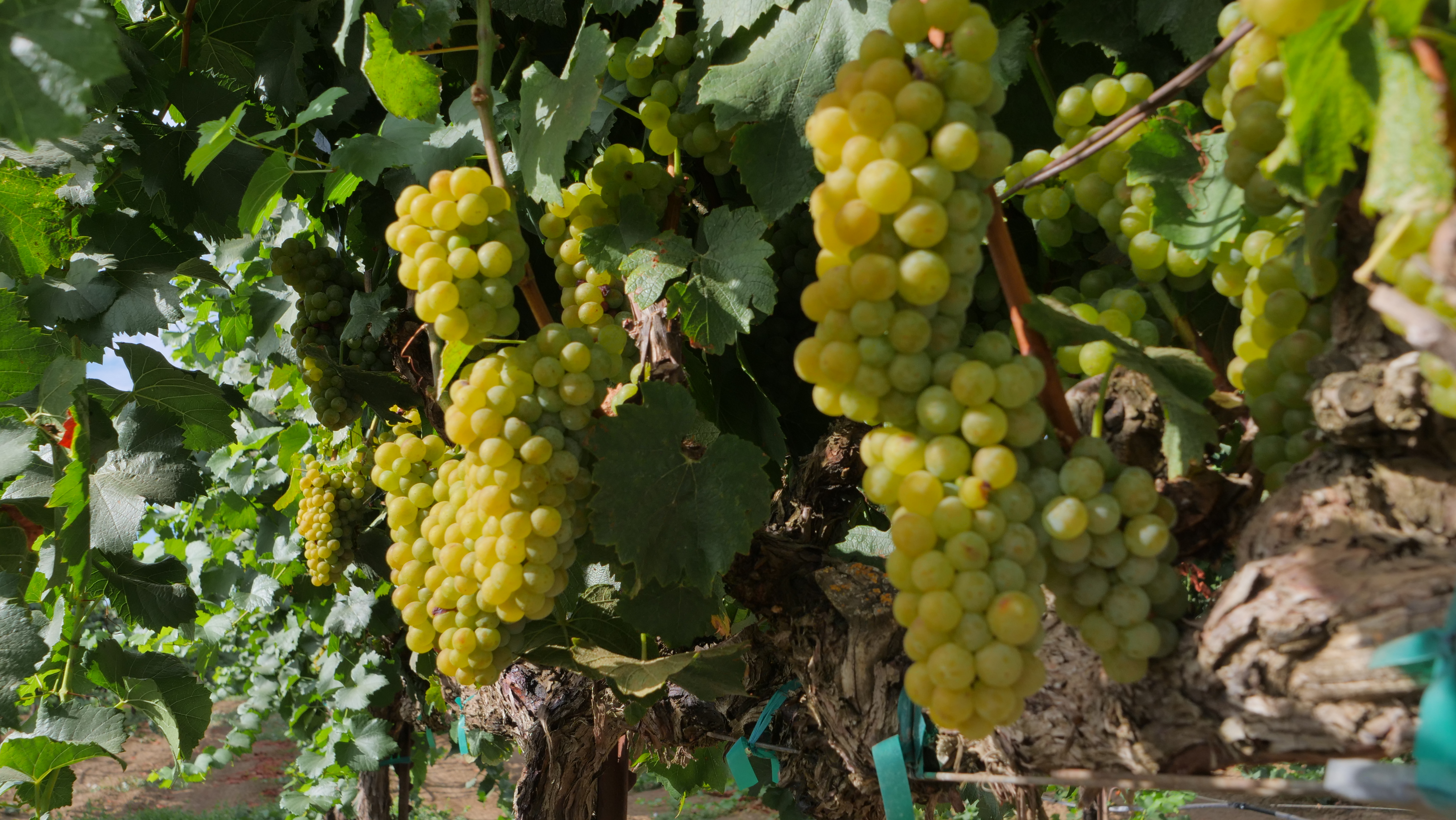
With the conclusion of harvest, it’s easy to shift focus from irrigation. The crops are in, and the season’s busiest time is nearly wrapped. However, the irrigation practices in the immediate post-harvest weeks are crucial for next year’s growth, yield, and quality.
Market conditions often tighten budgets, labor availability decreases, and water allocations may already be stretched thin from the season. At the same time, crops are still active beneath the soil line, requiring care to build root strength and store nutrients for the year ahead. Balancing limited resources with the ongoing needs of the crop can feel like a gamble, especially when every decision impacts next year’s performance.
How HotSpot AG Helps in Practice
Reliable irrigation automation makes all the difference. HotSpot AG’s systems were designed with the understanding that every farm has unique characteristics, such as older pumps, intricate irrigation layouts, and specific site challenges that don’t conform to a standard solution. HotSpot seamlessly integrates with existing grower infrastructure, eliminating the need for expensive overhauls.
After harvest, irrigation may not demand the same frequency as peak season, but it remains critical for root health, nutrient storage, and preparing crops for dormancy. The challenge is that labor is scarce, and no one wants to dedicate hours to managing water sets when crews are already reduced.
This is where HotSpot AG makes life easier:
- Automated Fertigation: Automate fertigation in tandem with irrigation schedules. Field level reporting of nutrient units and gallons applied when paired with pump, and valve control.
- Automated Pump and Valve Control: Schedule irrigations remotely and ensure water is applied at the right time without extra labor. water gets applied at the right time, even if no one is on site.
- Soil Moisture Monitoring for Root Health: Track active root-zone conditions with soil sensors to fine-tune light irrigations, protect soil structure, and support crop resilience into the next season.
- Reservoir and Tank Automation: Monitor and refill levels automatically to prevent costly overflows or shortages. This leads to a reduction waste, costs, and surprise issues.
Visualizing the Full System
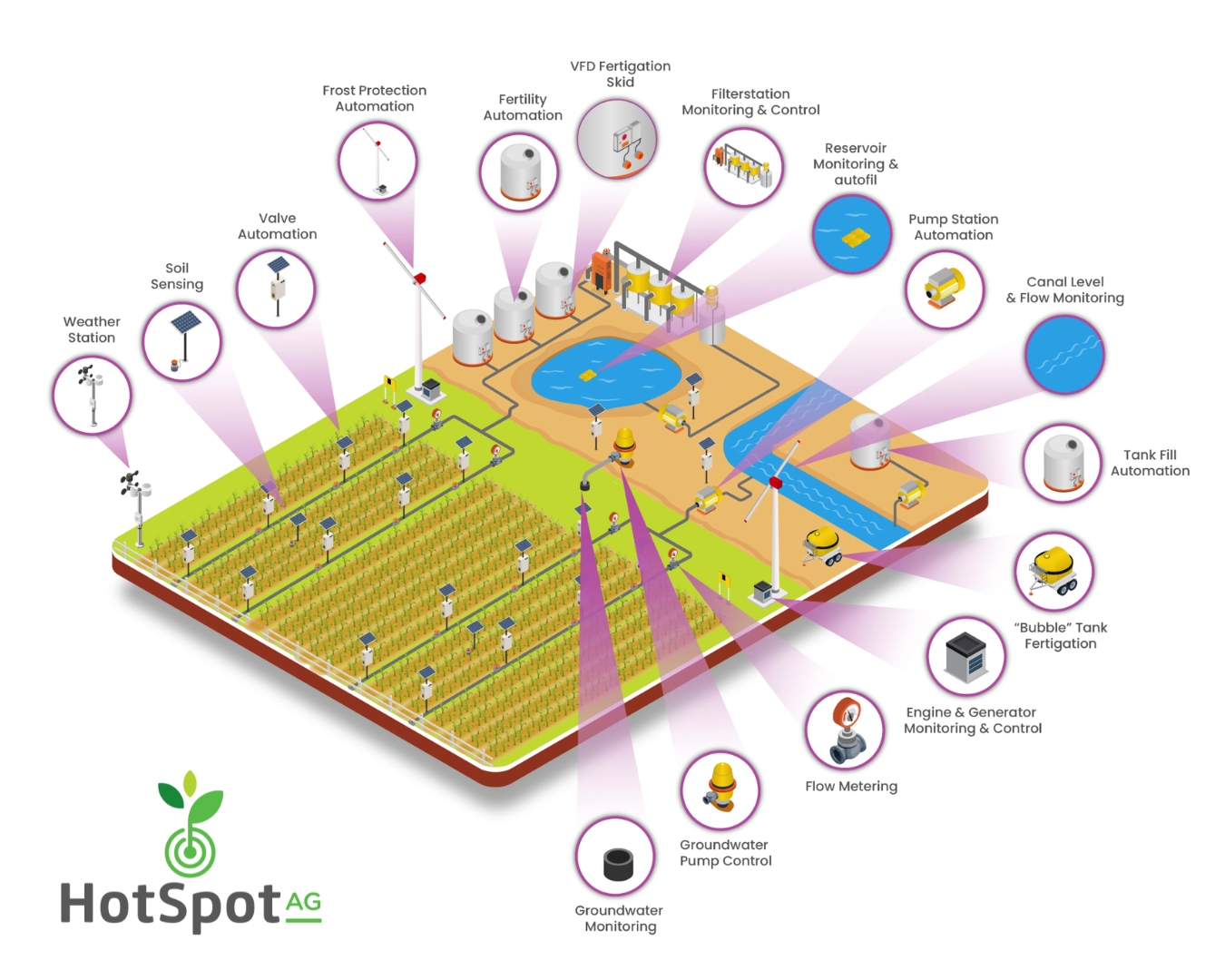
Post-harvest irrigation is about precision, not volume. Figure 1 gives a 360 degree look of pumps, valves, reservoirs, soil sensors, engine vitals, weather data, and more all in one place. This visibility makes it simple to schedule light irrigations for root health, remotely execute nutrient management programs, monitor frost risks, and track reservoir levels without extra field visits. Historical data adds context, helping growers adjust strategies for the next season. With the entire system connected, post-harvest water management becomes efficient, consistent, and stress-free.
Transparency for Better Planning
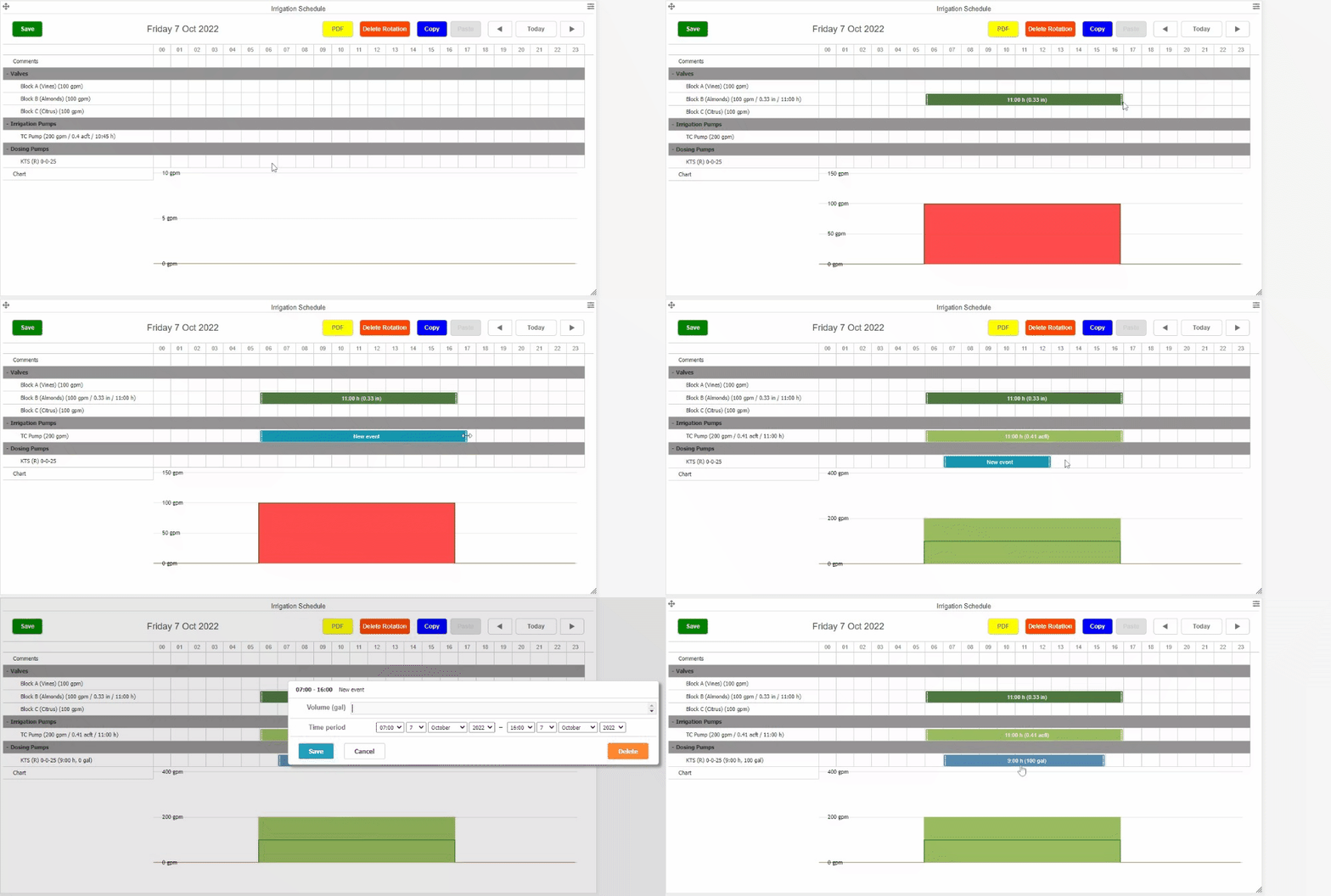
Having full visibility into irrigation operations provides growers with the confidence to plan ahead instead of reacting to problems as they arise. With access to real-time and historical data, growers can map out irrigations days or weeks in advance. This transparency reduces the risk of overlap or missed sets, helps align irrigation with labor and equipment availability, and makes it easier to balance water use within allocations. In practice, it turns irrigation from a reactive task into a strategic part of planning for the seasons ahead.
When is the right time to adopt?
While it may seem counterintuitive to invest in irrigation technology at the end of the season, the post-harvest period is when long-term returns are set in motion. Even modest improvements in off-season irrigation can prevent root damage, protect yield potential, and reduce costly inputs like fuel, labor, and fertilizer. By putting tools in place now, growers not only safeguard next year’s crop but also position themselves for measurable savings and efficiency gains from day one of the new season.
The payoff?
Peace of mind knowing that while labor, energy, and water are in short supply, each resource is used where it will have the greatest impact. After harvest, this precision supports healthier root systems, better nutrient storage, and ultimately, a stronger start to the next growing season.
Harvest may be winding down, but the groundwork for next year begins today.



Loading comments...